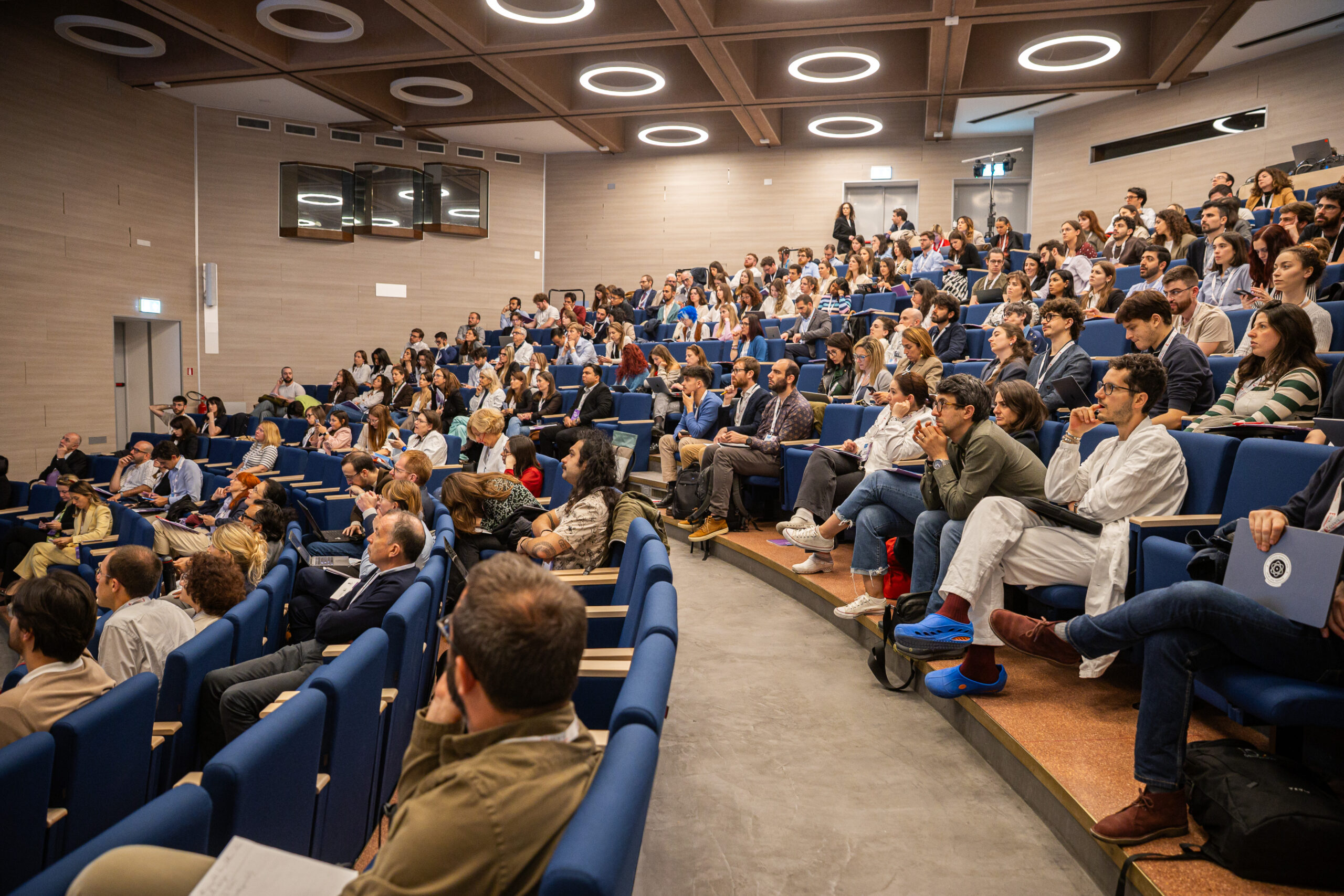
The third edition of the AI for Oncology conference took place in Milan on May 8–9, bringing together a global community of clinicians, researchers, technologists, and industry leaders to explore how artificial intelligence is mking leaps forward to improve the future of cancer care. Presided over by ESAC President Dr. Arsela Prelaj of the Fondazione IRCCS Istituto Nazionale dei Tumori, the conference drew participants from across the globe, reflecting the interdisciplinary nature of this fast-evolving field.
Hosted at the Fondazione IRCCS Istituto Nazionale dei Tumori the two-day event saw the over 300 participants (in person and online) receive a comprehensive overview at how AI technologies are being applied across the cancer care continuum—from diagnostics to personalized therapies, clinical trials, and beyond.
This year’s program highlighted the accelerating role of AI in improving diagnostic precision, integrating complex datasets, and tailoring treatments to individual patients.The conference featured a diverse faculty from leading institutions worldwide and included contributions from academic, clinical, and industry stakeholders, and allowed real world applications of AI in cancer being showcased through 45 posters and 3 flash talks from promising junior scientists.
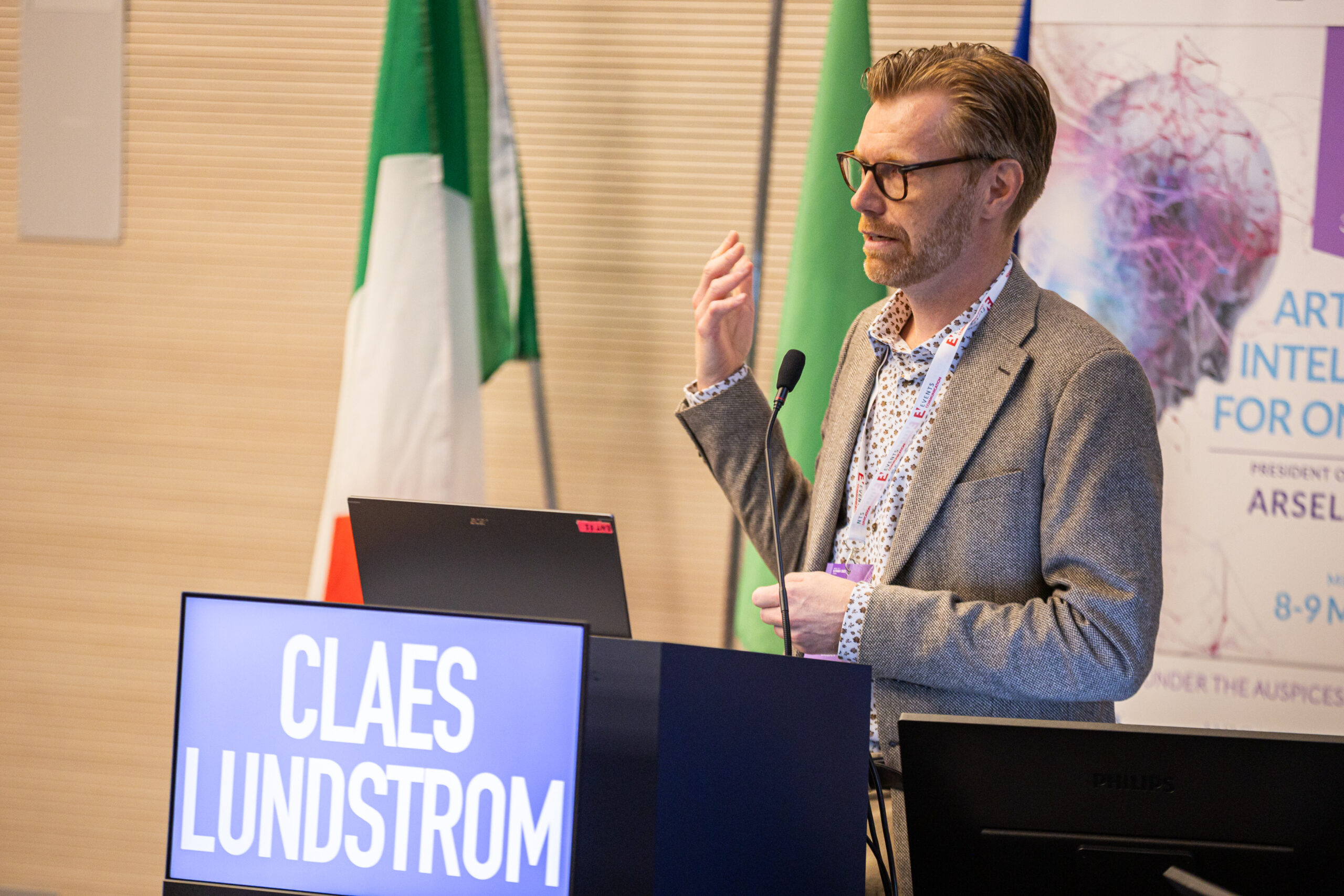
The conference opened with a strong focus on data-driven platforms, and how AI models imrpove patient stratification and treatment planning in the lung cancer setting. ESAC Board Members Claes Lundström (Linkoping University) and Daniel Truhn (University Hopital Aachen) offered valuable perspectives on large data infrastructures, decentralized diagnostics and federated learning as new ways to enhance collaborative research in privacy and security-compliant approaches.





A second session highlighted the ever present importance of interpretability, explainability and patient-centered research in AI applications in cancer care, with a talk from Board member Vanja Miskovic (Politecnico di Milano), prof. Gabriella Pravettoni, prof. Dean Ho and others. Loic Verlingue and Mihaela Aldea presented real-world applications of AI for clinical trials design, biomarker validation and support for Molecular Tumor Board work.
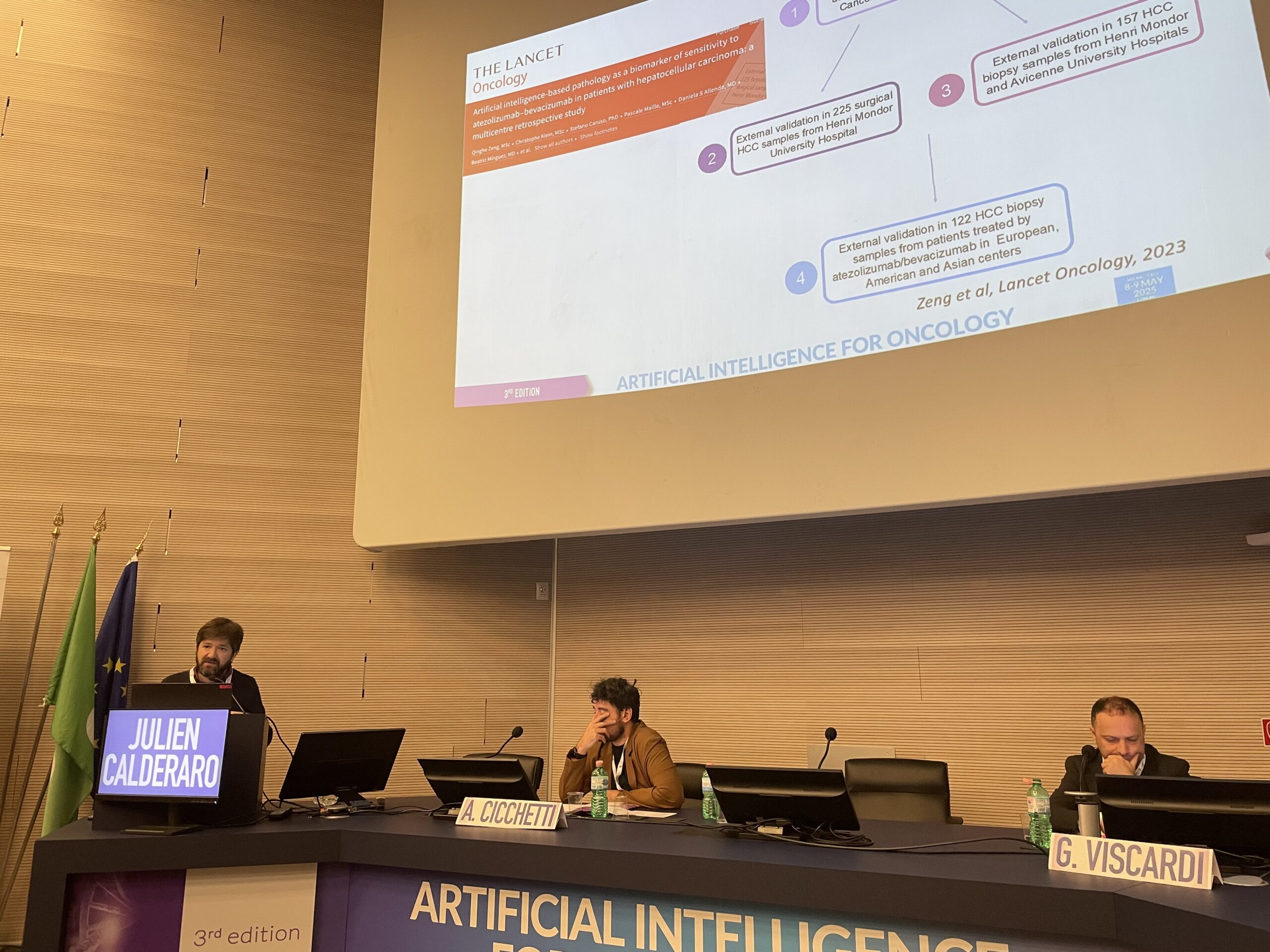
Sessions on radiomics and digital pathology featured clinical applications ranging from liver cancer prognosis to image-guided radiotherapy in colorectal cancer. From ESAC, Julien Calderaro, Raquel Pérez-Lopez shared real-world implementations of AI tools improving tumor characterization and response prediction. The multimodal data session revealed the groundbreaking work by Mireia Crispin, Sohrab Shah, Jana Lipkova, and others on integrating imaging, genomics, and single-cell analysis for predictive oncology.
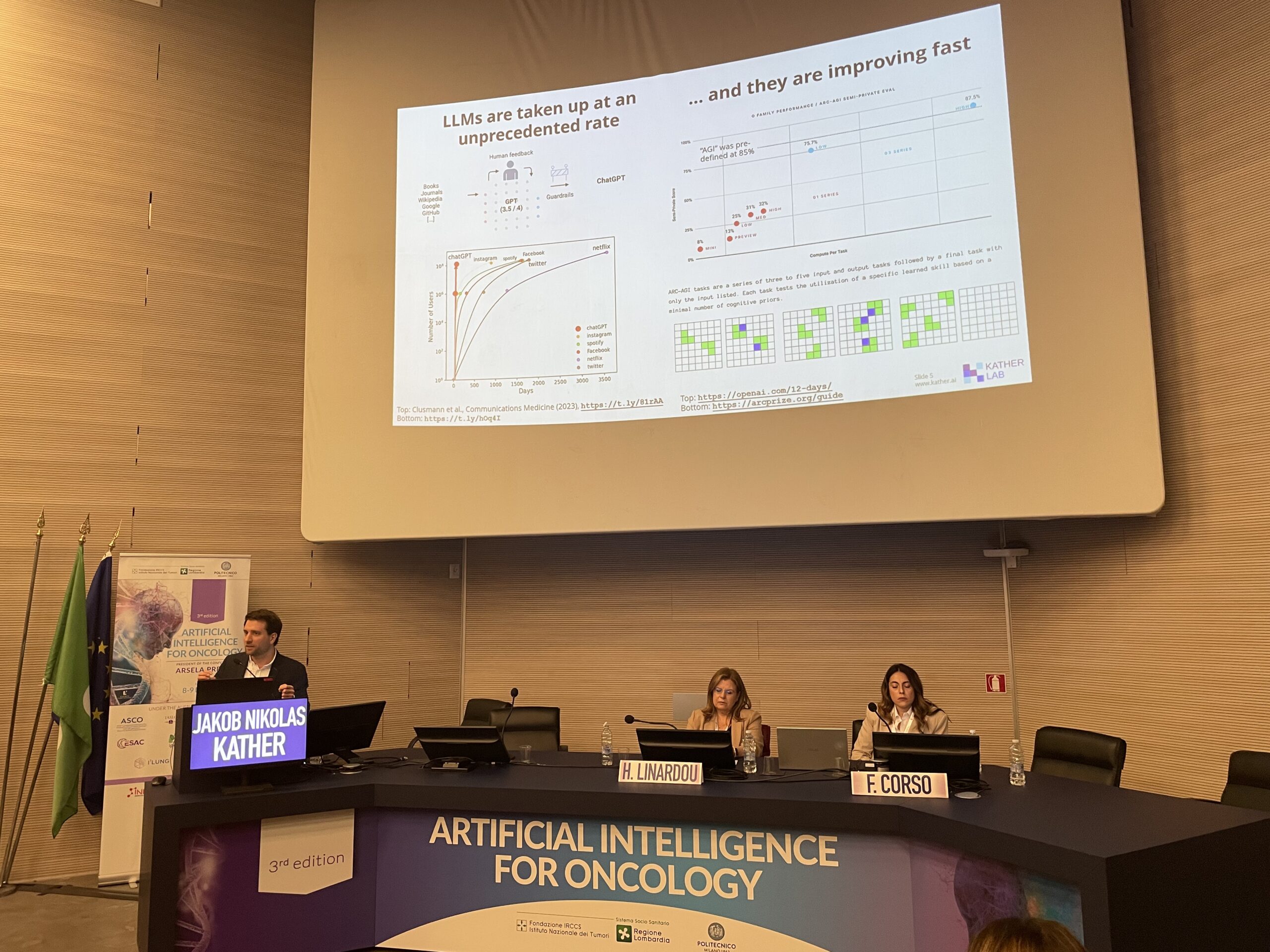
Finally it was a privilege to assist to two keynote addresses from our President-Ekect Jakob Nikolas Kather and Prof. Faisal Mahmood, respectively delving into their pioneering work in Large Language Models and Foundation Models in Digital Pathology, and how these technologies are already reshaping clinical workflows and diagnostic accuracy – and just getting started.
Importantly, the Conference was the occasion for the formal launch of the ESAC with an announcement, a presentation of its tenets and core objectives, and several calls to action
- Registrations are now open – webpage
- We are now accepting volunteer applications to our Working Groups and Committees
- Spread the word
Next year, the 4th Edition of the Conference will take place still in Milan, on May 7 and 8, 2026 – and will coincide with our first General Assembly meeting.